 Collector Club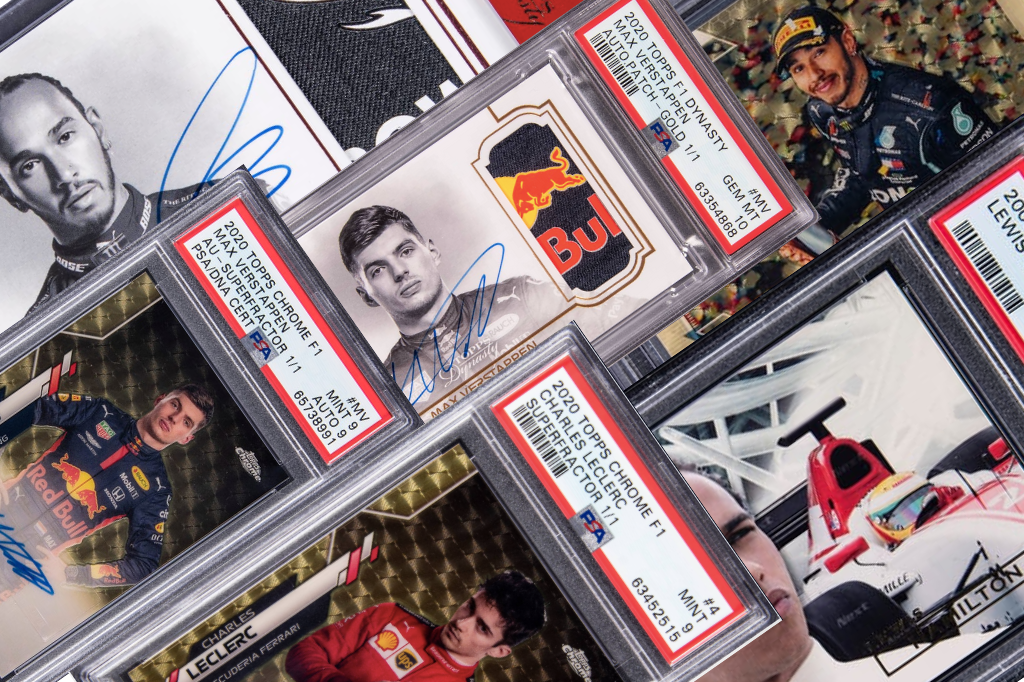
Formula 1 trading cards have surged in popularity since Topps launched its first official sets in 2020. Collectors now face a compelling choice: invest in rookie cards of emerging talents, or seek out cards of established legends. Here, we delve into the nuances of both options, exploring their appeal, value, and significance in the F1 card collecting landscape.
Understanding rookie cards in Formula 1
In traditional sports card collecting, a rookie card is typically the first card issued for a player in a major set. For Formula 1, the concept is relatively new, with Topps introducing its first official F1 cards in 2020. This means that many drivers who debuted before 2020 have their first Topps cards labeled as “rookies,” even if they had been racing for several seasons.
For instance, Max Verstappen, who began his F1 career in 2015, has his rookie card in the 2020 Topps Chrome F1 set. Similarly, Charles Leclerc and George Russell also have their rookie cards in this inaugural Topps release. These cards are often marked with an “RC” logo, indicating their rookie status. Collectors value these cards not only for their designation but also for their association with the drivers’ early career milestones.
The allure of Formula 1 rookie cards
Rookie cards hold a special place in the hearts of collectors. They represent the beginning of a driver’s journey in Formula 1 and offer a sense of nostalgia and potential. The 2020 Topps Chrome F1 set, being the first of its kind, has become a cornerstone for collectors seeking rookie cards of current stars.
Max Verstappen’s 2020 Topps Chrome F1 Autograph SuperFractor (#F1A-MV), a one-of-one card, exemplifies the value of rookie cards. This particular card fetched a significant sum at auction, highlighting the demand for rare rookie cards of top drivers. Similarly, Charles Leclerc’s 2020 Topps Chrome Sapphire Red Refractor sold for $43,920 (£32,427 at the time of publishing), underscoring the investment potential of rookie cards.
Collectors often view rookie cards as long-term investments, banking on the driver’s future successes to increase the card’s value. The combination of rarity, driver popularity, and career trajectory plays a crucial role in determining a rookie card’s worth.

The enduring appeal of legends
While rookie cards capture the excitement of a driver’s early career, cards featuring established legends offer a different kind of allure. These cards celebrate the achievements and legacy of drivers who have left an indelible mark on the sport.
Lewis Hamilton’s 2020 Topps Chrome F1 Superfractor (#1/1) stands as a testament to the value of cards featuring legendary drivers. This unique card sold for a staggering $900,000 (£664,500 at the time of publishing), setting a record for the most expensive F1 trading card. Hamilton’s dominance in the sport, coupled with the card’s rarity, contributed to its high valuation.
Similarly, cards of Michael Schumacher, Ayrton Senna, and Alain Prost continue to captivate collectors. The 2024 Topps Chrome Formula 1 set includes a Legends subset, featuring these iconic drivers. While these cards may not carry the “rookie” designation, their historical significance and the drivers’ accomplishments make them highly sought after.
Investment considerations: rookies vs. legends
When deciding between investing in rookie cards or those of established legends, collectors must weigh several factors. Rookie cards offer the potential for significant appreciation if the driver achieves substantial success. However, they also carry the risk associated with the uncertainty of a driver’s future performance.
On the other hand, cards of legendary drivers provide a more stable investment, backed by the drivers’ proven track records and enduring fan bases. These cards often maintain their value over time and can appreciate further as the drivers’ legacies continue to be celebrated.
Ultimately, the choice between rookies and legends depends on the collector’s goals, risk tolerance, and personal preferences. Some may opt for a diversified approach, acquiring both rookie cards of promising talents and cards of established legends to balance potential growth with stability.
The evolving landscape of Formula 1 card collecting
The Formula 1 trading card market continues to evolve, with new sets, parallels, and inserts introduced regularly. Topps’ annual releases, such as the Chrome and Sapphire editions, provide collectors with fresh opportunities to acquire cards of both rookies and legends. The inclusion of autographed cards, low-numbered parallels, and unique inserts adds layers of excitement and value to the hobby.
As the sport gains popularity globally, the demand for F1 trading cards is expected to grow. Collectors should stay informed about upcoming releases, monitor market trends, and engage with the community to make informed decisions. Whether chasing the next big rookie or honouring the legends of the past, the world of F1 card collecting offers something for every enthusiast.
Keep coming back to Collector Club for all the latest sports card news and trading card news, keeping you up-to-date with everything that’s going on in the hobby!